Featured
Unknown Facts About Rebuilding Personal Financial Standin...
Indicators on Key Things to Ask Prior to Enrolling You Ne...
Not known Factual Statements About Medical Debt How Infla...
More About Is Budget Adjustments for Debt Relief and Financial Stability : APFSC Appropriate for Your Situation
Table of Contents
That liberates cash in the short-term, and you may have three to 4 years to save toward the settlement amount. Very dangerous to credit history, largely due to missed out on repayments and an adverse "cleared up" mark that could remain on your credit record for as much as 7 yearsMay be only option if other alternatives (financial debt consolidation, equilibrium transfer bank card, debt forgiveness) aren't possibleTypically requires a cost to the 3rd party, which might offset some or all of the savings from financial debt settlementMay assist you prevent personal bankruptcy if you have actually missed a number of paymentsNot all creditors deal with financial obligation negotiation business Financial obligation mercy may be best for you if you are experiencing a monetary challenge that makes it virtually difficult to pay for your financial debt equilibriums.
With a DMP, you make one monthly repayment to the credit scores counseling company. Those funds are then distributed to creditors of your unsafe financial debts, such as charge card and installment loans. The company works with your lenders to reduce rate of interest or waive fees, but some creditors may reject such giving ins.
It can aid you pay down debt if you're able to safeguard a funding price that's reduced than the average price of the accounts you're consolidating. You need to refrain from racking up financial obligation on those recently cleared accounts or your debt might expand also higher.
That provides you plenty of time to eliminate or considerably lower your balance while making interest-free settlements.
Some Known Incorrect Statements About Understanding Various Relief Programs Accessible Today
You might require it if your financial institution or a collection firm ever attempts to gather on the financial debt in the future. The letter can show you don't owe what the debt collection agency's documents show. Yes, most of the times, the IRS thinks about forgiven debt as taxed income. When a lender forgives $600 or more, they are needed to send you Type 1099-C.
Financial debt forgiveness or negotiation virtually always injures your credit scores. Anytime you settle a debt for less than you owe, it may appear as "settled" on your credit scores record and affect your credit rating for 7 years from the date of settlement. Your credit report can additionally drop considerably in the months bring about the mercy if you fall back on repayments.
The Single Strategy To Use For Creating a Personalized Budget Adjustments for Debt Relief and Financial Stability : APFSC Strategy
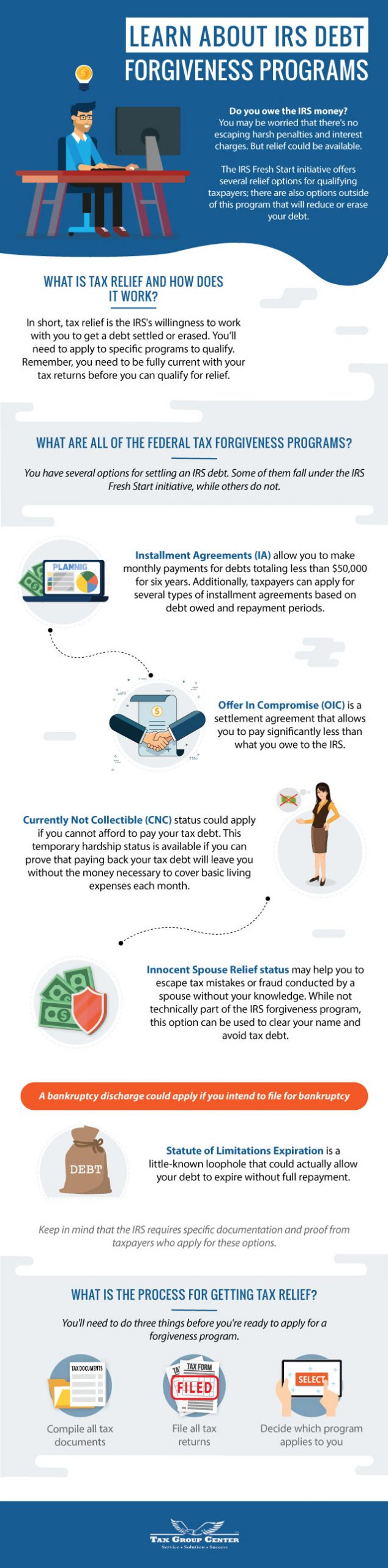
Tax financial obligation concession programs Tax obligation debt occurs when the amount of tax obligations you owe exceeds what you have paid. This scenario commonly arises from underreporting revenue, not submitting returns promptly, or disparities located throughout an internal revenue service audit. The repercussions of building up tax obligation financial obligation are major and can consist of tax liens, which give the internal revenue service a lawful insurance claim to your residential property as security for the debt.
Incomes and Bank Accounts IRS can levy (seize) wages and bank accounts to please the financial debt. Residential property Seizure In extreme cases, the IRS can seize and offer home to cover the financial obligation.
Depression, anxiousness, and other mental wellness concerns. Social Stigma Encountering legal activity from the IRS can bring social preconception. Damages to credibility and connections. Employment Opportunities An inadequate credit history as a result of tire financial obligation can limit employment possibility. Trouble finding or keeping a work. Government Advantages Tax obligation debt might influence qualification for federal government advantages, such as Social Safety And Security and Medicaid.
Understanding Your Budget Adjustments for Debt Relief and Financial Stability : APFSC Options Before Filing - Questions
The OIC takes into consideration several variables, consisting of the taxpayer's revenue, expenses, property equity, and capacity to pay. Successfully negotiating an OIC can be complicated, calling for a comprehensive understanding of the internal revenue service's standards and a solid disagreement for why your offer straightens with your capacity to pay. It's crucial to keep in mind that not all applications are approved, and the procedure requires comprehensive economic disclosure.
The internal revenue service analyzes your general monetary circumstance, including your earnings, expenses, asset equity, and capability to pay. You have to additionally be existing with all declaring and repayment requirements and not be in an open personal bankruptcy proceeding. The IRS also considers your conformity background, examining whether you have a document of prompt declaring and paying taxes in previous years.
Examine This Report on Is Bankruptcy Make Sense for Everyone
The application procedure for an Offer in Compromise entails numerous in-depth actions. You must finish and send Internal revenue service Kind 656, the Offer in Concession application, and Kind 433-A (OIC), a collection info declaration for people. These forms call for thorough economic info, including information regarding your earnings, debts, expenditures, and possessions.
Back taxes, which are unpaid tax obligations from previous years, can significantly increase your complete internal revenue service debt if not resolved quickly. This financial debt can accrue rate of interest and late repayment penalties, making the original quantity owed a lot bigger over time. Failing to repay tax obligations can lead to the IRS taking enforcement actions, such as issuing a tax lien or levy versus your building.
It is necessary to attend to back taxes as soon as possible, either by paying the full quantity owed or by preparing a settlement plan with the internal revenue service. By taking aggressive actions, you can stay clear of the accumulation of added rate of interest and penalties, and stop extra hostile collection activities by the IRS.
One usual reason is the idea that the taxpayer can pay the sum total either as a swelling amount or through a settlement plan. The IRS likewise considers the taxpayer's revenue, expenses, possession equity, and future earning potential. If these variables indicate that the taxpayer can manage to pay even more than the offered amount, the internal revenue service is most likely to decline the offer.
Some Known Factual Statements About How Much to Expect for Professional Budget Adjustments for Debt Relief and Financial Stability : APFSC Help
Dealing with Internal revenue service financial obligation can be complicated and complicated. Tax specialists, such as CPAs, tax obligation attorneys, or signed up agents, can offer invaluable help.

Table of Contents
Latest Posts

Unknown Facts About Rebuilding Personal Financial Standing the Smart Way
Indicators on Key Things to Ask Prior to Enrolling You Need To Know

Sector Developments in Should I Pay Credit Cards or Taxes First? Your Complete Debt Priority Guide : APFSC Programs Fundamentals Explained
More
Latest Posts
Unknown Facts About Rebuilding Personal Financial Standing the Smart Way
Indicators on Key Things to Ask Prior to Enrolling You Need To Know